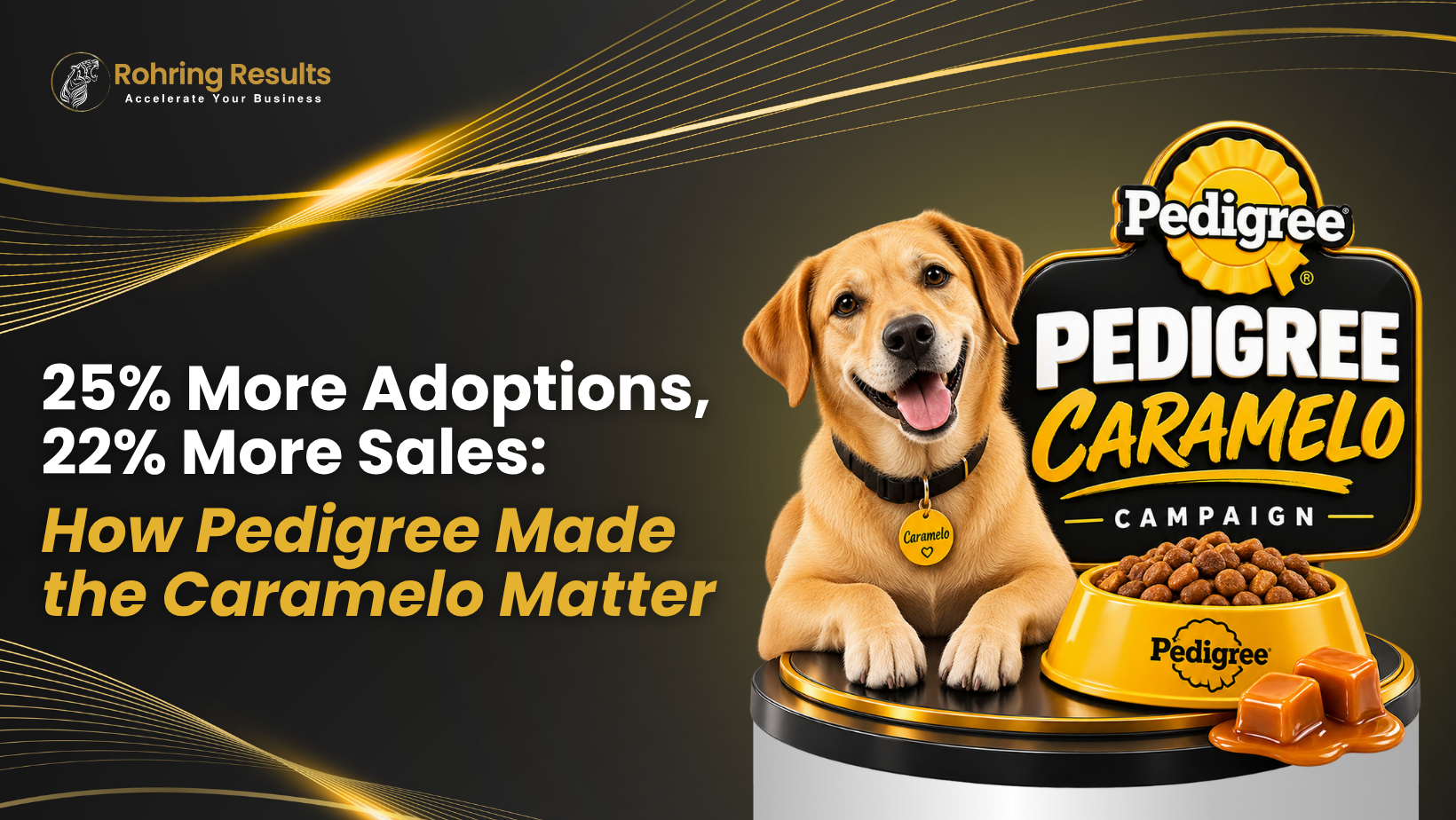

Brazil’s caramel-colored mixed-breed dog is easy to recognize. It appears in memes, popular culture, and homes across the country. Yet Pedigree identified a contradiction behind that familiarity: mixed-breed dogs were 90% less likely to be adopted than purebred dogs.
The Pedigree Caramelo campaign turned that problem into the center of the brand’s marketing. Instead of asking people to feel sorry for sheltering dogs, Pedigree treated the Caramelo with the status normally reserved for recognized breeds.
By 2026, WARC reported a 25% year-over-year increase in total adoptions, 15% volume growth, and 22% growth in net sales associated with the initiative.
The Challenge: A Famous Dog People Were Still Passing Over
Pedigree has supported dog adoption in Brazil for years through its Adotar é tudo de bom program. Caramelo presented a harder problem because awareness was not missing.
People already knew these dogs.
Pedigree describes the Caramelo as one of Brazil’s most recognizable cultural symbols, yet also one of the most common dogs in shelters. Its campaign site states that Caramelos had 90% lower odds of adoption than purebred dogs.
That gave the team useful insight: popularity and perceived value were not the same thing.
Pedigree’s Own Name Created an Interesting Tension
There was another layer to the problem.
“Pedigree” traditionally refers to documented purebred lineage. The brand promoting adoption therefore carried a name connected with the same breed of hierarchy it wanted consumers to reconsider.
The Pedigree marketing strategy used that contradiction instead of avoiding it.
If purebred dogs received certificates, clubs, organized shows, and official recognition, Pedigree would start giving similar treatment to the Caramelo.
The campaign shifted the conversation away from what mixed-breed dogs lacked and toward what society had chosen to value.
The Strategy: Give the Caramelo the Status of a Breed
Pedigree and AlmapBBDO created the Caramelo Kennel Club as a real platform rather than a fictional piece of advertising.
The brand assembled specialists, animal-welfare organizations, veterinarians, and genetics partners. It began registering Caramelos, researching their DNA, organizing events, and issuing Pedigree certificates to participating dogs. (Pedigree: Caramelo Kennel Club)
Pedigree also describes the genetic work as one of the largest genome studies conducted on mixed-breed dogs, involving hundreds of Caramelos. (Pedigree Brazil)
The Idea Was Easy to Understand
The campaign did not ask the public to absorb a complicated argument about animal adoption.
Its premise was clearer:
If recognized breeds receive special treatment, Caramelo should receive it too.
That idea could then appear across social content, events, celebrity participation, adoption initiatives, DNA research, certificates, and the Kennel Club without losing its meaning.
This is one reason the brand storytelling worked. Each execution added another part of the same story rather than introducing a different campaign message.
Cultural Familiarity Became an Advantage
The Caramelo was already embedded in Brazilian culture before Pedigree arrived.
The dogs had become internet characters and symbols of everyday Brazilian life. Pedigree did not need to manufacture affection for them.
It needed to redirect that affection toward adoption.
WARC’s campaign documentation notes that the brand used social media, public engagement, research, and personalities including Brazilian entertainer Tatá Werneck to challenge the difference between how Caramelos were celebrated culturally and how mixed-breed dogs were treated during adoption.
The Brand Joined a Conversation That Already Existed
This distinction is useful for other marketers.
A cultural campaign is stronger when the brand has a legitimate reason to participate.
Pedigree sells dog food and has a long-running adoption program. A campaign about how society values shelter dogs therefore connects directly with both the category and the company’s existing purpose.
The Caramelo was not a trending topic pasted onto an unrelated product.
That gave the purpose-driven marketing idea credibility.
Implementation: Make the Campaign Something People Could Join
Pedigree did more than publish content about adoption.
People could register their own Caramelos with the Kennel Club. Dogs involved in genetic research received certificates. Consumers could follow adoption events and learn about available animals.
The One Show’s 2026 campaign documentation reports that more than 2,800 people registered with the Caramelo Kennel Club during its first seven weeks.
That participation turned an advertising idea into experiential marketing. A person could encounter the campaign online, join the club, attend an event, register a dog, discuss the issue, or adopt.
Research Added Substance to the Creative Idea
The DNA project also gave the campaign more depth than a symbolic “Caramelos deserve pedigrees” message.
Pedigree was performing research, issuing certificates, and building infrastructure around the idea. That created material for continued coverage and conversation while demonstrating that the brand was willing to invest beyond paid media.
The marketing activity and the adoption effort supported each other.
The 2026 Results Showed a Wider Business Effect
In June 2026, WARC published its Creative Effectiveness case for Pedigree Caramelo. The reported results included:
- 25% year-over-year growth in total adoptions
- 15% growth in volume
- 22% increase in net sales
The One Show’s 2026 documentation provides additional marketing campaign results. Pedigree reported double-digit sales growth during the two months after the campaign, a one-percentage-point increase in value market share, and several brand and communication gains:
- +400% engagement compared with historical averages
- 98% positive brand sentiment
- +163% growth in searches for “Pedigree Caramelo”
- +26.5% increase in association between Pedigree and the adoption cause
These are campaign and award-entry results rather than independently audited causal studies. They should be read as Pedigree and its partners’ measurement of the initiative.
Even with that qualification, the range of outcomes matters. The campaign did not report only impressions or engagement. Its case includes adoption behavior, search demand, brand association, market share, sales, and volume.
Why the Campaign Worked
The numbers become more useful when we look at the decisions behind them.
It Started with a Real Contradiction
The strongest insight was not “people like dogs.”
Pedigree found something more specific: Brazil already loved the Caramelo culturally, yet those same dogs were still disadvantaged when people chose which animals to adopt.
That gap gave the campaign tension.
Businesses looking for a strong campaign idea can ask a similar question: where does customer behavior conflict with what people say they value?
That contradiction can be more interesting than another product’s claim.
The Creative Idea Changed the Frame
Pedigree could have produced another adoption appeal showing dogs waiting in shelters.
Instead, it changed the status of conversation.
Caramelos received a kennel club, certificates, genetic research, events, and the language normally associated with prestigious breeds. The campaign gave people a different reason to think about mixed-breed dogs without losing sight of the adoption problem.
Participation Supported the Message
The Kennel Club was useful because people could do something with the idea. Registration, research, events, and adoption gave the public clear ways to participate.That helped the campaign continue beyond a launch video or social post.
Purpose and Commercial Growth Were Connected
The business result did not sit outside Pedigree’s stated mission.
More adopted dogs can also mean more households entering the dog-food category. WARC’s 2026 effectiveness case specifically connects the adoption challenge with future category penetration and consumption.
That makes commercial logic easier to understand.
Helping more dogs find homes supported the cause while also expanding the market Pedigree serves. The company did not need to choose between purpose and growth because the strategy connected them.
The Campaign Also Changed an Institution
One of the more unusual outcomes happened beyond Pedigree itself.
The One Show reports that the Fédération Cynologique Internationale, described as the world’s largest canine organization, began allowing Caramelos and other mixed-breed dogs to participate in its shows.
That result fits the campaign premise especially well.
Pedigree had argued that mixed-breed dogs deserved some of the recognition historically reserved for breeds. An established canine institution changing its participation rules gave that argument a tangible outcome.
The campaign moved from portraying cultural change to contributing to it.
What Other Businesses Can Learn
Copying the visible parts of Caramelo would miss the point. Most companies do not need a social cause, a celebrity, or a national cultural symbol. The transferable lessons are more practical.
Find the Problem Behind the Obvious Problem
Pedigree’s surface problem was low adoption. The deeper problem involved perception and status. Before planning a campaign, businesses can ask why customers behave the way they do instead of stopping at what the numbers show.
Low conversion may come from uncertainty rather than price. Poor retention may come from onboarding rather than product quality. Weak local demand may come from trust rather than awareness.
A better diagnosis creates more useful marketing.
Build the Idea Around Something the Brand Can Own
Pedigree had a credible relationship with dogs, adoption, and the meaning of pedigree. The strongest campaigns usually connect back to something the company has permission to discuss.
That can come from its product, customer experience, history, expertise, community, or operating model. Cultural relevance works better when the connection does not need to be explained.
Give People a Role
Participation can take many forms. A campaign may ask customers to register, vote, submit, attend, test, share, contribute, or take useful action. The interaction should support the idea rather than exist only to increase engagement.
Measure Several Layers of the Result
Pedigree’s case stands out because it reports more than communication metrics. Businesses can separate campaign performance into:
- Attention: reach, views, engagement, searches
- Perception: sentiment, awareness, consideration, brand association
- Behavior: registrations, inquiries, visits, trials, adoptions
- Business: sales, volume, market share, customer growth
Not every campaign will have data for all four levels. Using more than one gives decision-makers a better sense of what has changed.
Purpose Works Better When It Connects with the Business
The Pedigree Caramelo campaign is often described as purpose-led work, but purpose alone does not explain its effectiveness.
The campaign addressed a genuine problem connected to Pedigree’s category, found a cultural insight people already understood, created an idea people could participate in, and measured both social and commercial outcomes.
By 2026, the reported effect included 25% growth in adoptions, 15% volume growth, and 22% higher net sales.
The lesson for other businesses is not to find a cause and attach the company logo to it.
A stronger purpose-driven marketing strategy begins where the business, the customer, and the issue have a credible reason to meet.
Rohring Results makes a similar point in its discussion of digital storytelling in marketing: the story needs to connect with an objective and be measured by what it changes rather than existing only as content.
Pedigree gave a familiar dog a different kind of status.
The campaign worked because changing that perception gave people a reason to adopt, and gave the business a reason to grow with them.