
Background
Uber Eats has sponsored the NFL for years, one name among more than 40 sponsors competing for the same few seconds during any given broadcast. A logo on a jersey or a stadium banner rarely moves a delivery app’s order numbers on its own. Uber Eats needed its NFL presence to do more than existed. It needed to turn years of sponsorship to spend into something people would remember and act on.
The Challenge
The online food delivery market has matured. Growth in the dense cities that built Uber Eats’ original customer base was slowing, and the next wave of customers lived further out, in suburban areas where ordering delivery during a game wasn’t yet a habit. At the same time, more than 40 other brands were paying for the same NFL connection. A generic message about fast delivery on game day wasn’t going to stand out in a broadcast already full of sponsor logos.
The Strategy
Finding the food already hiding in football
The team behind the campaign, creative agency Special US and media agency PHD, started with a simple observation: American football is already full of food. Teams are named after animals’ people eat. A blowout gets called a “feast.” The sport’s own language was already halfway to being a menu.
Backing it with real order data
Uber Eats’ own order data showed food orders spiking during commercial breaks that featured food ads. Football wasn’t food-adjacent by coincidence. It was already shaping what and when people ordered.
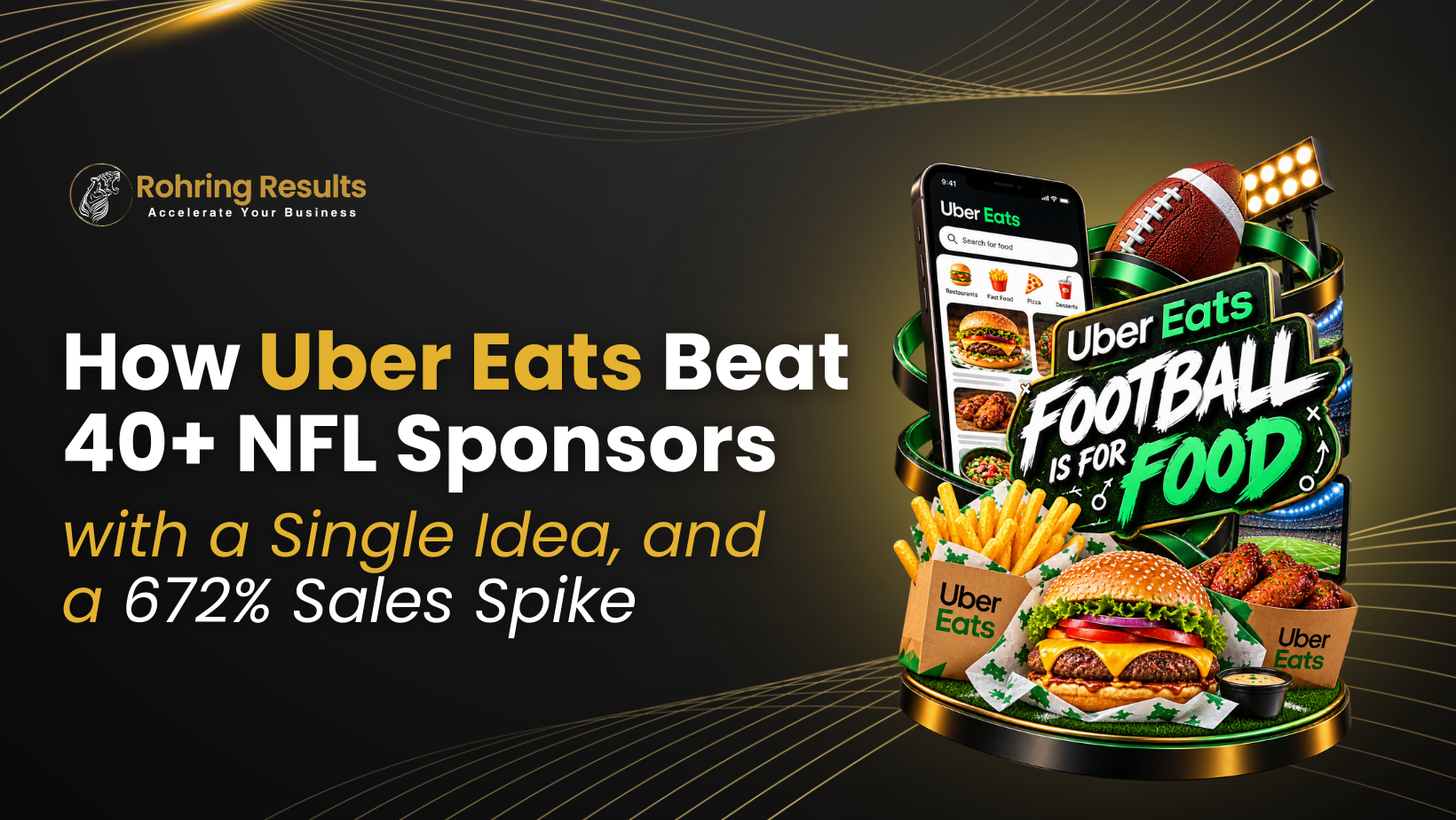
From there, the idea followed naturally. What if football hadn’t only become linked to food, but had secretly been invented to sell it? The campaign built a mock conspiracy theory around that idea, revealing football as the “National Foodball League.”
Implementation
The campaign didn’t launch as one ad. It ran as a season-long story, planting food references through NFL broadcasts, social content, and in-game moments, so that by the time the payoff arrived, people already had the context for the joke.
The centerpiece was a Super Bowl film starring Matthew McConaughey, built as a mock exposé revealing the food-football conspiracy, paired with a takeover of the Superdome that carried the joke into the stadium itself.
The story didn’t stop at the Super Bowl. A follow-up film brought in Bradley Cooper, playing an outraged Philadelphia Eagles fan storming into the same boardroom to defend football’s honor against executives still insisting it was invented to sell snacks. That sequel gave the campaign a second wave of attention months later, timed to the Eagles’ own Super Bowl run.
Every part of the campaign, across every channel, pointed back to the same idea. Nothing needed to be reinvented for social versus broadcast versus the stadium. The joke traveled in one piece.
The Results
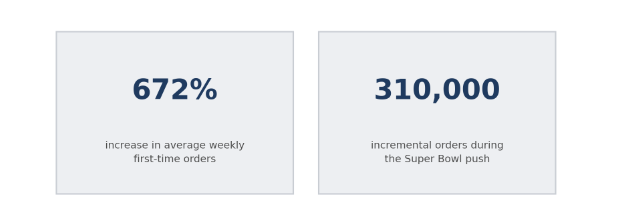
According to WARC’s case study coverage, the campaign produced a 672% increase in average weekly first-time orders and 310,000 incremental orders during the Super Bowl push alone. WARC called it the most commercially successful campaign in Uber Eats’ history. The work went on to win the Grand Effie at the 2026 Effie Awards US Gala, plus gold awards in Delivery Services and in Brand Integration and Entertainment Partnerships, and a Silver Lion in Creative Effectiveness at Cannes.
Key Takeaways
The idea didn’t come out of nowhere. It came from noticing a pattern already sitting in Uber Eats’ own order data, then finding the cultural angle that explained it. That combination, a real behavior signal plus a genuine cultural link, kept the joke from feeling like a stretch.
The campaign also resisted saying everything in one ad. Planting the idea across a full season meant the eventual reveal landed with an audience already in on the bit, instead of hearing the whole idea cold.
And it had a clear, measurable goal from the start. The joke was memorable, but the campaign was built to move an order count, not only get a laugh.
Lessons for Other Businesses
A business doesn’t need an NFL sponsorship budget to use this same thinking. The transferable part isn’t the joke about football. It’s the method: find a real, data-backed connection between a cultural moment and what the business sells, commit to that idea across every channel instead of scattering different messages, and measure the campaign against something concrete, whether that’s orders, calls, or bookings, rather than reach alone.
Most local and regional businesses will never match a national ad budget. What this campaign shows is that the budget wasn’t the real differentiator. The specificity of the insight was. A landscaping company, a med spa, or a home services brand sitting on its own customer data likely has a smaller version of the same type of pattern worth building a story around.
That’s the same thinking behind the campaign work Rohring Results builds for clients: start with what the data already shows about how customers behave, then build the story around that instead of a generic industry message.