When ChatGPT started taking over the digital marketing industry, everyone lost their minds. AI and automation on digital marketing have resulted in many people losing their jobs. Some businesses stopped paying for digital marketing services and other digital marketing companies had to quickly adapt to survive.
Crazy, right? It’s been what.. two to three years since the industry adjusted to the madness AI started. But, the most important question is did we really adapt, or are we just pretending everything is fine?
Sure, AI tools like ChatGPT and automation platforms made things faster and cheaper, but they also created a whole new set of challenges.
Businesses started asking, “Why pay for a marketing agency when I can get an AI to do the same thing for a fraction of the cost?” And honestly, they weren’t wrong—at least on the surface.
So, where does that leave us? Are marketers now just babysitting AI tools, or are we finding ways to work alongside them? Let’s be real—it’s a bit of both. Let’s find the impact of AI and automation on digital marketing.
What Is AI?
Artificial Intelligence (AI) is the simulation of human intelligence by machines, especially computer systems. It’s designed to perform tasks that typically require human thinking, such as understanding language, recognizing patterns, solving problems, and even making decisions. Essentially, AI allows machines to “learn” from data, adapt to new inputs, and perform various tasks more efficiently over time.
AI isn’t simply ChatGPT. It’s a combination of technologies, like:
-
- Machine Learning (ML): AI systems that learn and improve over time by analyzing data.
-
- Natural Language Processing (NLP): How AI understands and responds to human language (like ChatGPT).
-
- Computer Vision: Artificial intelligence that can interpret and make decisions based on visual data, like recognizing faces or objects in photos.
What Is Automation in Digital Marketing?
Automation in digital marketing is the use of various technologies to perform repetitive marketing tasks without the need for constant manual input. It’s like your personal assistant that handles the routine stuff, so you can focus on strategy, creativity, and connecting with your audience.
For example, automation can help with:
-
- Email Campaigns: Automatically sending emails to customers based on their behavior, like a welcome email when someone signs up or a follow-up after a purchase.
-
- Social Media Scheduling: Planning and posting content on platforms like Instagram or Twitter without having to hit “post” every time.
-
- Ad Management: Running and optimizing ads automatically based on performance data.
Automation tools like HubSpot, Mailchimp, and Hootsuite make these tasks easier and more efficient. They allow marketers to set up workflows, track engagement, and adjust campaigns based on real-time results.
5 Major Ways AI and Automation Impact Digital Marketing
AI and automation on digital marketing makes it easier and more efficient for businesses to connect with their target audiences and streamline their strategies. By analyzing large amounts of data, predicting trends, and automating tasks, these tools bring efficiency and precision to marketing efforts.
However, understanding how AI and automation impact digital marketing on a deeper level requires looking beyond the surface to uncover their true potential and the nuances of their application.
1. Custom Content Based on Who’s Watching
AI can adapt content dynamically, showing users personalized messages, images, or ads based on their preferences or behaviors. For example, someone interested in fitness might see workout gear ads, while another user might see recipes. This creates a tailored experience, but it’s essential to monitor how well the system understands user data. If the data isn’t accurate or up-to-date, personalization might miss the mark, requiring periodic review and adjustments.
2. Spotting Trends Before They Happen
AI excels at predicting future trends by analyzing patterns in historical data. This helps marketers prepare campaigns in advance and even stay ahead of competitors. However, predictions aren’t guarantees—they’re probabilities based on past information. Factors like sudden cultural shifts or economic changes can impact outcomes, so it’s best to use AI insights as a guide, supported by human judgment and flexibility.
3. Tracking How People Feel About Your Brand
AI and automation on digital marketing, such as AI-powered sentiment analysis, can monitor online reviews, social media comments, and customer feedback to gauge how people perceive your brand. This helps businesses respond quickly to negative trends or amplify positive feedback. While sentiment analysis is a powerful tool, nuances like sarcasm or slang can sometimes be misinterpreted. Regularly reviewing flagged insights can help ensure accurate conclusions and maintain the quality of marketing efforts.
4. Targeting Smaller Local Areas
AI can create highly targeted local campaigns, reaching specific neighborhoods or micro-markets with ads tailored to their needs. For example, a restaurant might run ads promoting lunch deals to people within walking distance. While this level of precision is impressive, it’s important to validate the location data used. Keeping the data accurate ensures the right people see your message, maximizing the effectiveness of your campaigns.
5. Improving Photos and Videos
AI tools can analyze visual content and suggest ways to enhance it, like cropping images, adjusting lighting, or picking the best thumbnail for a video. These tools speed up production and improve the quality of visuals. However, creative oversight is still important to make sure the AI’s choices align with your brand and audience preferences. Small tweaks by a human can make a big difference in how content is perceived.
What Are the Benefits of AI and Automation on Digital Marketing?
AI and automation are great tools that have changed the way businesses handle digital marketing. They make it easier for companies to connect with their customers, save time, and create better strategies. While these tools aren’t perfect, they offer many advantages that help businesses work smarter and reach their goals. Let’s look at some of the biggest benefits:
1. More Personalized Marketing
AI helps businesses understand what their customers like by analyzing their behavior, such as what they click on or buy. With this information, companies can send personalized ads, emails, or recommendations that feel more relevant. For example, if someone loves sports, they might see ads for running shoes or workout gear. When customers see content that matches their interests, they’re more likely to pay attention and take action, like making a purchase or signing up for a service.
2. Saves Time and Money
AI and automation on digital marketing handle repetitive tasks that used to take a lot of time, like scheduling social media posts, sending emails, or tracking how ads are performing. This frees up time for marketing teams to focus on creative work, such as coming up with new ideas or building relationships with customers. Plus, by completing these tasks faster and more efficiently, businesses can save money and accomplish more with fewer resources.
3. Helps Businesses Make Smarter Decisions
AI can look at huge amounts of data quickly and spot patterns or trends that might take a person much longer to figure out. For example, it can show which ads are working best or what products people are most interested in. With this information, businesses can make smarter decisions about where to spend their time and money. Instead of guessing what might work, they can rely on data to guide their choices.
4. Better Customer Support
Tools like chatbots and virtual assistants make it easy for customers to get help quickly. For instance, if someone has a question about a product or needs help placing an order, a chatbot can provide answers instantly—any time of the day or night. This makes customers feel supported and valued, which can lead to better reviews and stronger loyalty. While chatbots handle simple questions, human support is still there for more complex issues.
5. Better Results with Less Effort
AI and automation on digital marketing make campaigns more accurate and effective. For example, AI can figure out the best times to send emails or show ads, ensuring they reach the right people at the right time. By being more precise, businesses can get better results, like higher sales or more website visits, without putting in as much effort. This also helps companies get more value from their budgets.
6. Quick Changes When Needed
Sometimes, marketing campaigns don’t go as planned, or customer preferences change. AI tools can monitor how campaigns are doing in real time and suggest adjustments, like tweaking the ad copy or changing who sees the ads. This flexibility helps businesses stay on track and respond quickly to what their audience wants.
7. Simplifies Complex Processes
Marketing can involve many moving parts, like finding new customers, sending follow-up emails, and keeping track of sales. Automation tools bring all these pieces together, making the process easier to manage. For example, a CRM (Customer Relationship Management) system can automatically remind a business to follow up with a potential customer or track where they are in the sales process. This keeps everything running smoothly.
What Are the Disadvantages of AI and Automation on Digital Marketing?
AI and automation bring efficiency and innovation to digital marketing, but they also come with challenges that marketers need to manage thoughtfully. Here are some of the key disadvantages of AI and automation on digital marketing that you need to consider:
1. Missing the Human Touch
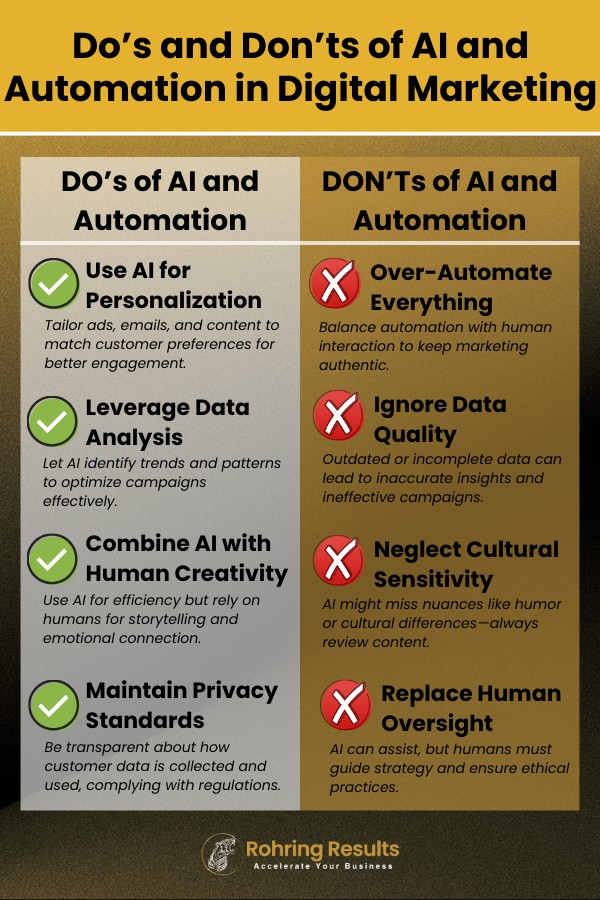
AI can’t replace the creativity and emotional understanding that humans bring to marketing. Automated content might lack personality or fail to resonate with audiences on a deeper level. This can make campaigns feel less engaging, so it’s crucial to combine AI with human input to keep messaging authentic and relatable.
2. Reliance on Accurate Data
AI and automation on digital marketing depend heavily on the quality of the data they’re given. If the data is incomplete or outdated, the insights and decisions generated might lead to ineffective campaigns. Regularly checking and updating data is essential to avoid errors and ensure that these tools stay accurate and aligned with marketing goals.
3. High Costs and Technical Expertise
Investing in AI and automation tools can be expensive, especially for smaller businesses. Additionally, using these tools effectively often requires specialized training or hiring experts, which can add to the cost. Businesses need to weigh the long-term benefits against the initial investment to decide if it’s the right choice for them.
4. Overuse of Automation
When automation is used too much, it can make interactions feel impersonal. For instance, relying heavily on chatbots might make customers feel unheard if they can’t easily reach a real person when needed. Striking a balance between automation and human support ensures that customers still feel valued and understood.
5. Difficulty Understanding Context
AI and automation on digital marketing have greatly improved data processing, but they often struggle with understanding subtleties like cultural differences, humor, or sarcasm. This lack of context can lead to messaging that feels off or doesn’t resonate well with certain audiences. Human oversight is essential to ensure campaigns align with the intended tone and audience preferences.
6. Privacy and Data Concerns
AI often requires large amounts of user data to be effective, which can raise concerns about privacy and security. Mishandling this data can lead to trust issues with customers or even legal problems. Businesses must handle data responsibly and comply with privacy regulations to maintain credibility.
7. Job Displacement
As AI takes over repetitive tasks, there’s potential for certain roles to become redundant. While this creates opportunities for new positions in managing and optimizing AI, it can be a difficult adjustment for workers whose roles are affected. Companies can support employees by providing training to help them transition into new roles.
8. Complexity and Learning Curve
AI and automation on digital marketing are powerful tools, but they can be difficult to learn, especially for teams unfamiliar with the technology. This learning curve might slow down initial implementation and require additional resources, such as time and training, to fully integrate these tools into a business’s operations.
9. Bias in AI Algorithms
AI systems learn from the data they’re trained on, and if that data contains biases, it can lead to unfair outcomes in marketing campaigns. This might result in unintentional exclusion or stereotyping of certain groups. Regularly reviewing and refining AI algorithms is important to minimize these issues and create inclusive campaigns.
Frequently Asked Questions
Can small businesses benefit from AI and automation, or is it only for large companies?
Small businesses can benefit from AI and automation too. Many affordable tools are designed for smaller budgets and don’t require advanced technical skills. These tools can help small businesses streamline their marketing efforts, save time, and compete with larger brands.
What types of marketing tasks are best suited for automation?
Tasks like email marketing, social media scheduling, customer follow-ups, and basic data analysis are ideal for automation. These repetitive tasks free up time for marketers to focus on strategy and creativity.
How does AI handle multi-language campaigns?
AI tools equipped with natural language processing (NLP) can translate and create content in multiple languages. However, businesses should double-check translations to ensure cultural nuances and local preferences are respected.
How can businesses measure the success of AI-driven marketing efforts?
Success can be measured by tracking key performance indicators (KPIs) such as conversion rates, engagement metrics, customer retention, and ROI. AI tools often include analytics dashboards that make it easier to monitor and evaluate these results.
Schedule a Discovery Call with Rohring Results Today!
AI and automation on digital marketing help businesses work smarter, not harder. But at the end of the day, marketing needs a human touch to make it special. By using these tools carefully, businesses can connect with their customers in meaningful ways. If you’re looking for a way to boost your digital marketing for your business, Rohring Results is here to help. Schedule a discovery call today to get started.
 Find us on Google Maps! Digital Marketing Agency in Bradenton