
Post the same kind of content today that performed well a year ago, and it likely reaches fewer people. That is not a platform glitch. It is math. There is a lot more content competing for the same amount of attention.
What the Data Shows
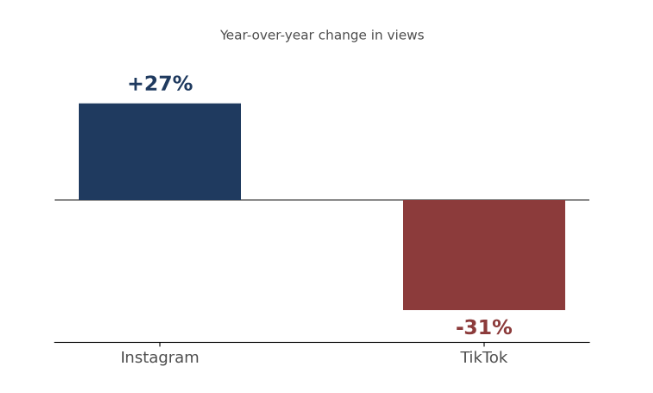
According to Metricool’s 2026 platform data, Instagram views were up 27% and interactions up 19% over the past year. TikTok moved the opposite direction: views down 31%, reach down 29%, interactions down 31%.
The obvious read is that TikTok is struggling and Instagram is winning. The real explanation is simpler and applies to both platforms: content volume exploded. Metricool users posted 72% more videos and 140% more image posts than the year before, a roughly 80% jump in total content. More posts chasing the same amount of scrolling time means the average post reaches fewer people, even if total attention on the platform has not dropped.
The Content That Lands Still Performs
This is not a story about content stopping from working. On TikTok specifically, video duration stayed flat, the full watch rate only slipped 10%, and engagement rate held at 3.67%. People who watch a video and like it still watch it the way they always do. Fewer people are seeing it in the first place.
Why Instagram Looks Different Right Now
Instagram made a specific change that helps explain its numbers: a single “Views” metric that now counts every replay and every time a post gets re-served, plus an algorithm that brings posts back to people who scrolled past them the first time. That combination pushes the view count up even when engagement per person has not changed much.
What This Means for a Marketing Strategy
A flat or declining reach number does not automatically mean the content got worse, or the strategy stopped working. It might mean the platform got more crowded, which is a different problem with a different fix.
Posting more to compensate can make this worse, not better, because it adds to the same volume of problem dragging averages down for everyone. The businesses seeing real gains right now are the ones improving what makes a person stop and finish a video, not the ones posting twice as often.
What to Do About It
Watch engagement rate, not only view count
A lower total reach with a steady or rising engagement rate means the content still works. It is competing in a bigger pool, not performing worse.
Prioritize saves and shares
Both platforms increasingly reward content that gets saved or sent to someone else over content that only gets a quick like. That signal carries more weight now that algorithms have so much more content to sort through.
Resist the urge to post more often
More volume from a business usually means more competition against its own older content, not more total reach. A smaller number of stronger posts often performs better than a larger number of average ones in a crowded feed.
The Bigger Picture
Every platform is dealing with the same math problem: more people posting that the same number of hours a day to watch it. That pressure will not ease up. The businesses that adjust their expectations, and their content, around it will read their own numbers more accurately than the ones still comparing this year to a much less crowded version of the same platform.
Rohring Results builds social content strategy around this reality: fewer, stronger posts aimed at getting saved and shared, rather than volume for its own sake.