
Background
The Field Museum in Chicago is a nonprofit competing for attention against a city full of things to do, and against national brands with far bigger marketing budgets. Winter is its hardest season. Cold weather keeps casual visitors away, and the museum needed a way to bring people back through the doors before spring.
The Challenge
The museum had a new exhibit to promote Bloodsuckers, built around blood-feeding creatures like leeches, vampire bats, and mosquitoes. That is a hard sell on its own. Most people do not walk past a poster about parasites and feel a pull to buy a ticket. The museum needed a way to make the exhibit sound like something people wanted to go to do, not something educational to sit through.
The Strategy
Leo Burnett Chicago, working with Publicis North America, Aisle Rocket, and PXP Studios, started with something Chicagoans already do without needing convincing: brave freezing weather for good food. Instead of fighting that habit, the campaign was built around it.
The idea became Blood Appétit, a limited-time culinary partnership between the museum and local restaurants. Restaurants created special menu items tied to the exhibit theme, and diners who tried them earned discounted tickets to see Bloodsuckers in person.
Implementation
The campaign lived where its audience already was in restaurants across Chicago, not only in museum marketing channels. Food became the entry point into a science exhibit, and the discount gave people who were already going out to eat a reason to add the museum to their plans. The tie between the two was direct enough that trying the food and visiting the exhibit felt like one experience instead of two separate asks.
The Results
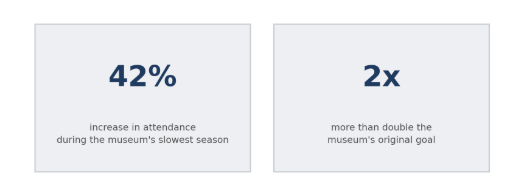
The campaign drove a 42% increase in attendance during what is normally the museum’s slowest season, more than double what the museum had set out to achieve. That result was strong enough to win the Grand Effie at the 2025 Effie Awards US Gala, beating entries from major global brands with far larger budgets. Effie Worldwide called it proof that courageous, insight-driven work can come from organizations of any size.
Key Takeaways
The campaign worked because it did not try to make bugs interesting on their own. It found something the audience was already motivated to do, going out for a good meal in winter, and built a bridge from that behavior straight to the museum’s front door.
It also matched the size of the idea to the size of the museum’s real advantage: a strong local restaurant network and a distinctive, slightly strange exhibit, not a national ad budget. Competing on a bigger brand’s terms would have been a losing fight. Competing on local relevance was not.
Lessons for Other Businesses
Any organization with a modest budget and a specific local advantage can use the same logic. Find a habit people already have, then figure out how the business fits naturally into it, rather than trying to convince someone to want something new from scratch.
The Field Museum also shows that a big result does not require a big story. The idea here was simple enough to explain in one sentence, and that simplicity is part of why it worked well enough to beat brands with far more money behind them.
Rohring Results looks for this same type of fit when building campaigns for smaller clients: a real local advantage, paired with a habit the audience already has, instead of a message that has to create demand from zero.