Executive Summary
The consumer digital marketing environment is undergoing rapid transformation due to the rise of generative AI, evolving search habits, and shifting social media behaviors. This report synthesizes current data, platform changes, and industry insights to help U.S. consumer-focused businesses adapt their strategies effectively. Key trends include declining organic website traffic from search due to AI summaries, the dominance of short-form video, the rise of social commerce, and the critical role of authenticity and user-generated content in influencing purchase decisions.
1. Research Focus: How Generative AI Is Redefining Consumer Search and Content Discovery
Trend: Google’s Search Generative Experience (SGE) and other generative AI tools (e.g., ChatGPT, Bing Copilot) now provide synthesized answers directly within search results.
Impact:
- Declining Click-Through Rates (CTR): AI summaries at the top of search pages have reduced organic CTR by 18–64%, depending on query type.
- Search Behavior Shift: As of early 2025, 13.14% of Google searches trigger an AI overview. By 2027, over 90 million users in the U.S. are projected to rely on generative AI as their primary search method.
Strategic Response for B2C Marketers:
- Optimize for inclusion in AI answers by clearly addressing consumer FAQs on websites.
- Structure content with schema markup and answer-based formatting.
- Emphasize E-E-A-T (Experience, Expertise, Authoritativeness, Trust) to improve content visibility and credibility.
Key Insight: Generative AI is disrupting traditional search flows, requiring businesses to rethink how visibility and traffic are generated beyond standard SEO tactics.
2. Social Media as the New Consumer Discovery Engine
2.1. Rise of Short-Form Video
- Consumer Preference: 42% prefer videos under 15 seconds; 39% prefer videos under 30 seconds (Sprout Social, 2025).
- Platform Behavior: TikTok, Instagram Reels, and YouTube Shorts dominate engagement among Millennial and Gen Z users.
Recommended Action:
- Produce frequent, value-rich microvideos (e.g., how-to tips, product demos).
- Prioritize authenticity over production quality to improve relatability.
2.2. Emergence of Social Commerce
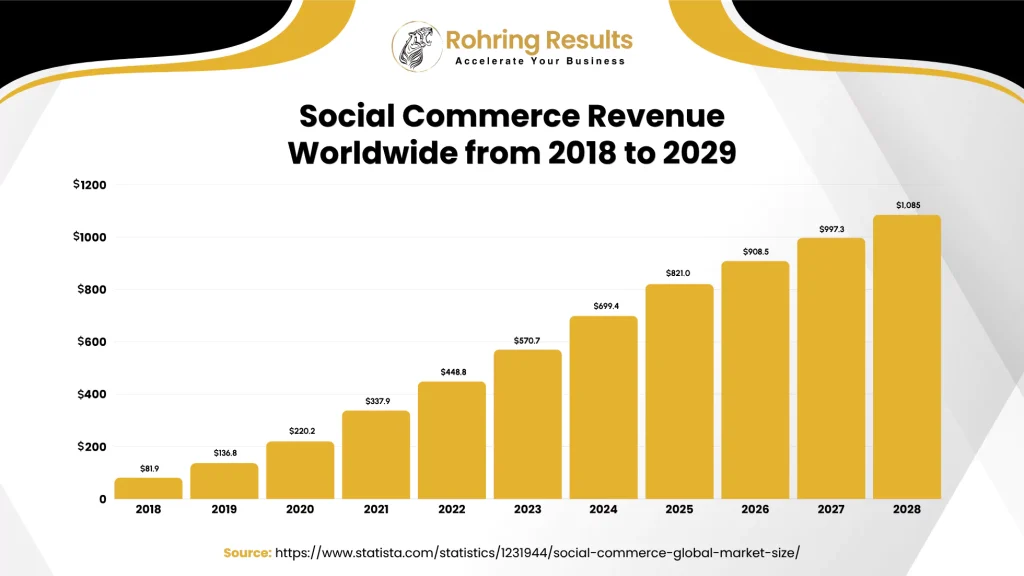
Revenue Forecast: Global social commerce revenue is expected to surpass $1 trillion by 2028 (Business.com, 2025).
- User Behavior: 53% of social users turn to platforms for purchase inspiration.
Platform Features to Leverage:
| Platform | Feature | Recommended Use Case |
| Shops, Reels Shopping | Product discovery & impulse purchases | |
| TikTok | Shop tab, Creator Marketplace | Trend-driven products |
| Product Pins, Boards | Niche lifestyle product discovery |
2.3. Social Search Replacing Traditional Search
- Gen Z increasingly searches TikTok and Instagram instead of Google for product reviews and recommendations.
- Social content must now be optimized with searchable keywords and hashtags.
Key Insight: Social media is evolving into a primary search and commerce ecosystem. B2C brands must treat platforms like TikTok and Instagram not just as engagement channels, but as discoverability engines.
3. Trust Signals and User-Generated Content (UGC) as Conversion Drivers
3.1. UGC Drives Revenue Growth
- Brands featuring UGC see up to 63% year-over-year revenue growth.
- Authentic customer posts outperform traditional ads in engagement and conversions.
Examples of Effective UGC:
- Customer product photos
- Unboxing or testimonial videos
- Review highlights and reposts
3.2. Micro-Influencers vs. Celebrity Endorsements
- Smaller, niche influencers with authentic engagement are outperforming mega-influencers.
- Long-term partnerships drive better brand alignment and trust.
FTC Compliance Note: Ensure all influencer partnerships disclose sponsored content per updated FTC guidelines (2025).
Key Insight: Social proof and peer-driven content outperform paid ads. B2C brands should invest in cultivating advocates and encouraging public endorsements through reviews, reposts, and contests.
4. AI-Enhanced Content Creation: Efficiency Without Losing Authenticity

Caution: Overuse of AI risks generic tone. Human oversight is critical for accuracy and brand personality.
Key Insight: AI should augment, not replace, marketing creativity. Businesses that balance AI efficiency with human authenticity will lead in engagement.
5. Strategic Recommendations for B2C Businesses
- Audit Your Content: Identify pages that rank for high-volume queries and optimize them to be featured in AI-generated summaries.
- Build a Video Pipeline: Commit to weekly short-form content creation with a smartphone-first approach.
- Embrace Social Commerce: Set up shopping integrations across key platforms and treat them as digital storefronts.
- Cultivate UGC and Micro-Influencer Content: Launch a hashtag campaign or referral contest to boost user participation.
- Diversify Channels: Don’t rely solely on Google. Grow traffic through email marketing, YouTube, podcasts, and Pinterest.
Conclusion
B2C marketing in 2025 is increasingly AI-assisted, socially driven, and trust-dependent. The traditional funnel has fractured into multiple pathways, including search via AI, purchase via Reels, reviews on TikTok. U.S. consumer businesses must evolve by leading with transparency, creativity, and efficiency. At Rohring Results, we help clients turn disruption into opportunity through smart, data-informed strategy. Because as we say every day: Don’t outspend your competition, outsmart them. Schedule a discovery call today!